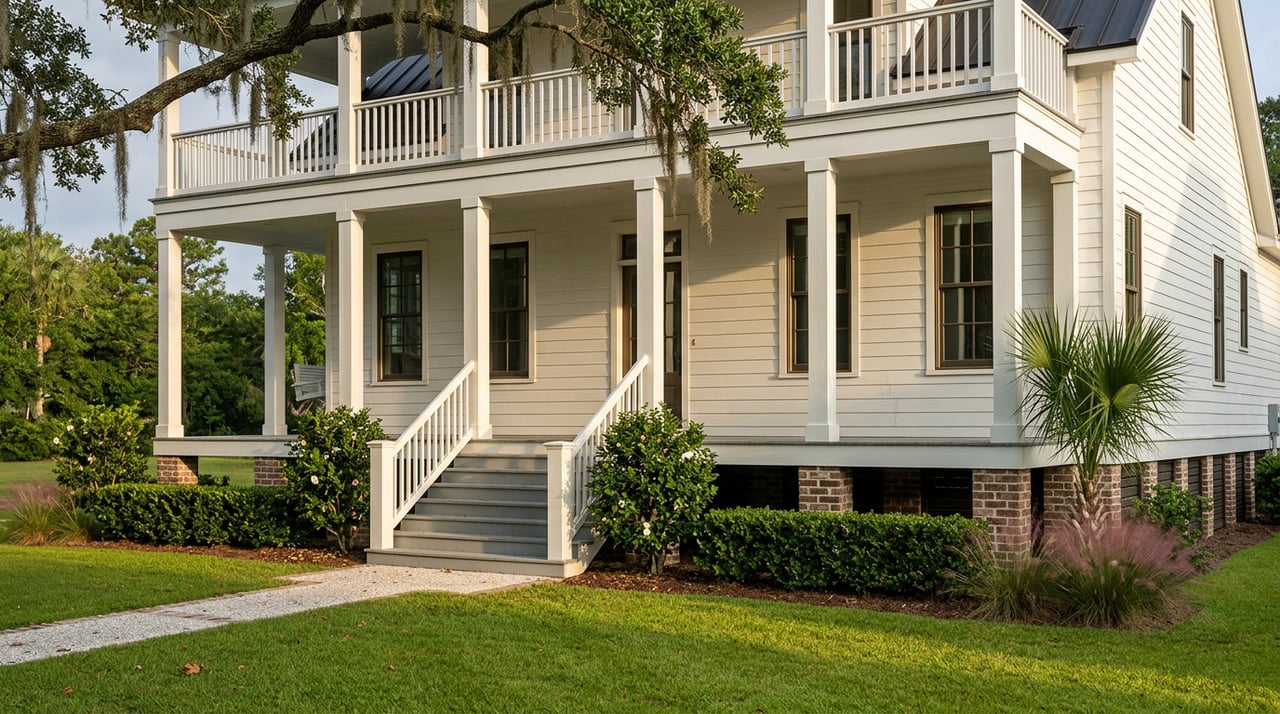
What Jekyll Island Land Lease Homeowners Should Know
August 13, 2026
August 13, 2026
Somewhere in the closing package for a Jekyll Island home sits a line item that looks like a typo. A buyer purchasing a $700,000 cottage sees an annual charge to the Jekyll Island Authority for a few hundred dollars and assumes it is a processing fee or a rounding error. It is neither. It is the entire rent the State of Georgia charges for the ground the house sits on, and understanding why that number is so small tells you more about this market than any comparable sale will.
Every residential lot on Jekyll Island is leased, not owned. The Jekyll Island Authority's own homeownership guidance is direct about it: the State of Georgia holds fee-simple title to all land on the island, and homeowners buy the structure and the right to use the land for the remaining term of a long-term lease, with current terms expiring anywhere from 2049 to 2088. What you own at closing is the house. What you lease is everything underneath it.
The rent for that lease is set by formula, not negotiation. The Authority's own residential lease FAQ puts it plainly: annual rent runs four-tenths of one percent of the land's fair market value as assessed by the Glynn County Tax Assessor. On a lot valued at $215,000, the Authority's own example works out to $860 a year, before any discount. Scale that up to a premium marsh-front or golf-adjacent lot assessed well into six figures, and the annual bill still lands in the low thousands, a fraction of what a comparable fee-simple property tax bill would run on the mainland.
That is where most guides to Jekyll Island ownership stop. They explain the mechanics and move on to closing checklists. The more useful question is what an authority funds itself on when residential rent is set deliberately low.
The Jekyll Island Authority does not answer to a city council or a county tax digest. According to Georgia.gov, the Authority is a self-supporting body that draws its operating revenue from leases, park fees, and island amenities. The Authority's own site is even more blunt about the constraint it operates under:
Jekyll Island does not receive any tax revenues for its operation.
That single sentence explains a lot. A board that cannot levy property tax and does not receive state appropriations has to fund conservation, road maintenance, water and sewer, and every capital project entirely from what visitors and businesses spend on the island. Homeowner lease rent is part of that mix, but it is a small part. In the Authority's own fiscal year 2023 board materials, business leases brought in roughly $4 million against about $669,000 from residential lot leases, a ratio of roughly six to one in favor of commercial income. Homeowners are not the revenue engine. Hotels, concessions, and amenity operations are.
That structural reality shows up clearly in the Authority's most recent numbers. The board approved its budget for fiscal year 2026-2027, covering July 2026 through June 2027, projecting close to $51.2 million in revenue against roughly $44.4 million in expenses, a surplus of about $6.8 million, according to the Brunswick News. Executive Director Mark Williams framed it as potentially one of the strongest financial years in the Authority's history, a striking contrast to the pandemic-era budgets of five years earlier. That surplus does not come from lease rent checks in the mailbox. It comes from tourism, and tourism revenue is what funds everything else the island depends on, including the infrastructure homeowners use every day.
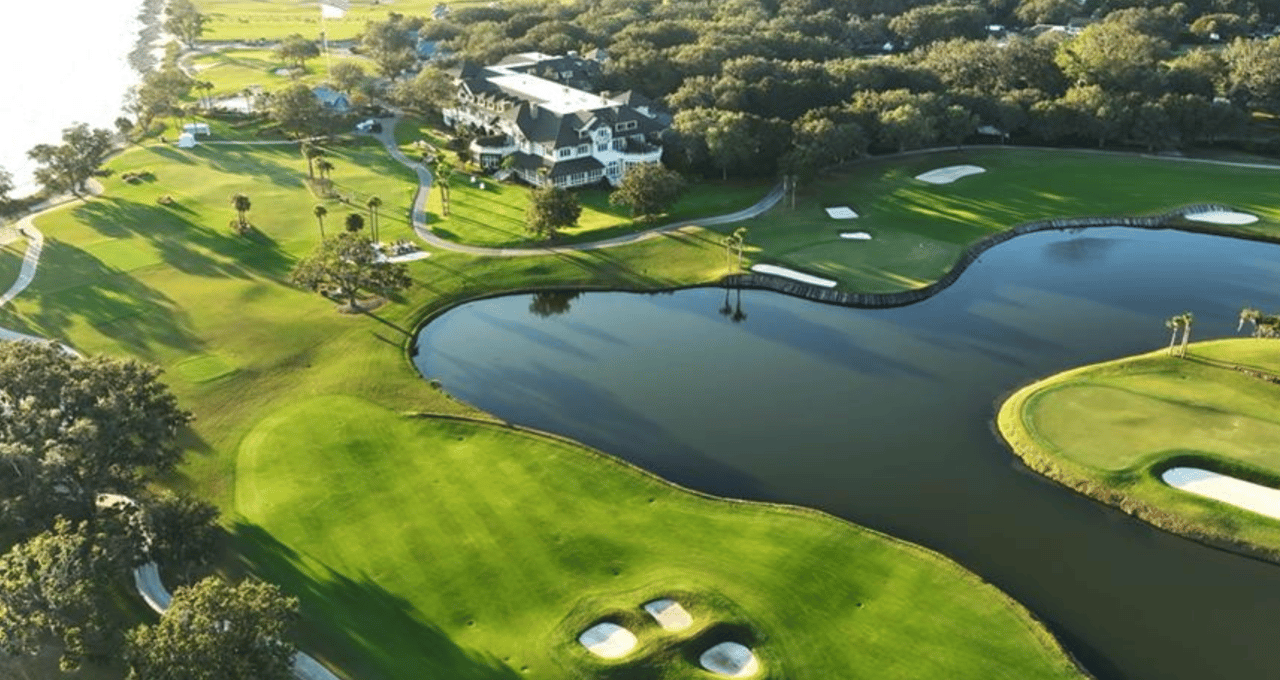
That funding logic is playing out in public right now. Plans working through the Authority's review process this spring called for up to 185 new hotel rooms across two projects, according to The Current, a nonprofit newsroom covering coastal Georgia. One proposal would put a boutique hotel of up to 125 rooms on the island's golf course, a scaled-up version of what a 2022 Golf Improvement Plan originally recommended as a 50-room property. A second would more than double the existing Beachview Club Hotel, from 38 rooms to as many as 98, alongside a new parking lot on a wooded lot across the street.
Residents pushed back. Jon Stevenson, who has visited Jekyll since 1974 and become a full-time resident in 2018, is one of roughly 500 households on the island according to Census Bureau figures cited in the same reporting. He pointed out that average hotel occupancy for 2023 through 2025 ran about 62.5%, barely above the roughly 60% break-even threshold, and questioned how adding more rooms would improve profitability rather than just spread the same demand thinner. His broader worry was less about spreadsheets than character: "Visitors have a vested interest in keeping it as it is," he said.
Ben Carswell, president of the Coastal Georgia Audubon chapter, raised a related point at the Authority's April board meeting, noting that the planned two-acre parking lot is nearly as large as the existing 2.75-acre lease for the entire Beachview Club Hotel. He pressed the board on the double standard, arguing a homeowner asking to lease adjacent land for a driveway expansion would never get a hearing: "I don't think that applicant would even make it before this board."
Neither Stevenson nor Carswell is wrong that the math looks different depending on where you sit. Residents see character and capacity strain. The Authority sees a funding model with exactly one lever it can pull hard: visitor-facing revenue.
None of this makes Jekyll Island a bad purchase. It does mean a Jekyll Island purchase is a bet on how a public authority balances conservation against commercial revenue, and that calculus shows up in details worth confirming before you write an offer:
Anyone comparing Jekyll Island to other Golden Isles markets will notice the price data does not line up cleanly across sources, and that inconsistency is itself informative.
| Source | What it measures | Figure | Window |
|---|---|---|---|
| Redfin | Median sale price, trailing 3 months | $700,000 (+12.6% YoY) | Through May 2026 |
| Redfin | Average sale price, single month | $1.44 million (+119% YoY) | June 2026 update |
| Movoto | Median list price | $849,000 (+11% YoY) | July 2026 |
| PropertyIQ | Median home value (ZIP 31527) | $793,000 (+7.6% YoY) | Through June 2026 |
| PropertyFocus | Median sale price, single-family | $532,750 | As of July 2026 |
| PropertyFocus | Properties sold, trailing 12 months | 33 | Through July 2026 |
With only 33 residential sales across a full year, a single oceanfront estate closing can pull an average price up by hundreds of thousands of dollars while barely moving the median, which is exactly what appears to be happening between Redfin's $700,000 median and its $1.44 million average in the same update. This is not a data quality problem. It is what a genuinely thin, bifurcated market looks like when condos in the low hundreds of thousands and estate homes well above a million dollars are getting averaged together. The lease structure, not the sale price, is the one number every property on the island actually shares.
Does the lease rent increase over time? Yes. Because the formula is tied to assessed land value, rent adjusts as Glynn County reassesses the property, so a rate quoted today is not fixed for the life of the lease.
Can you finance a Jekyll Island leasehold property with a standard mortgage? Generally yes, though lenders may request the full lease document and ask more questions as remaining term shortens, so it is worth having that conversation before you are under contract rather than during it.
What happens to the home when the lease ends? Per the Authority's own guidance, an owner may remove or relocate the structure at their own expense within the last two years of the lease term, provided the lot is restored to vacant land under Glynn County permitting rules, unless the lease is renewed before then.
Jekyll Island's leasehold system has kept per-lot development pressure lower than most fee-simple barrier islands for decades, and the tradeoff is a governing authority whose revenue depends on hotel rooms and visitor spending rather than homeowner rent. That is not a reason to avoid the island. It is a reason to ask sharper questions than the ones most buyers arrive with.
If you are weighing a Jekyll Island purchase against St. Simons, Sea Island, or a mainland alternative, Page Aiken can walk through what a specific lot's lease term, rental obligations, and proximity to planned Authority projects actually mean for your numbers. Start the Conversation.
Stay up to date on the latest real estate trends.
Local
Not All Marshfront Is Created Equal

A data-driven approach paired with international experience ensures every client benefits from a deeper understanding of market movement and opportunity.