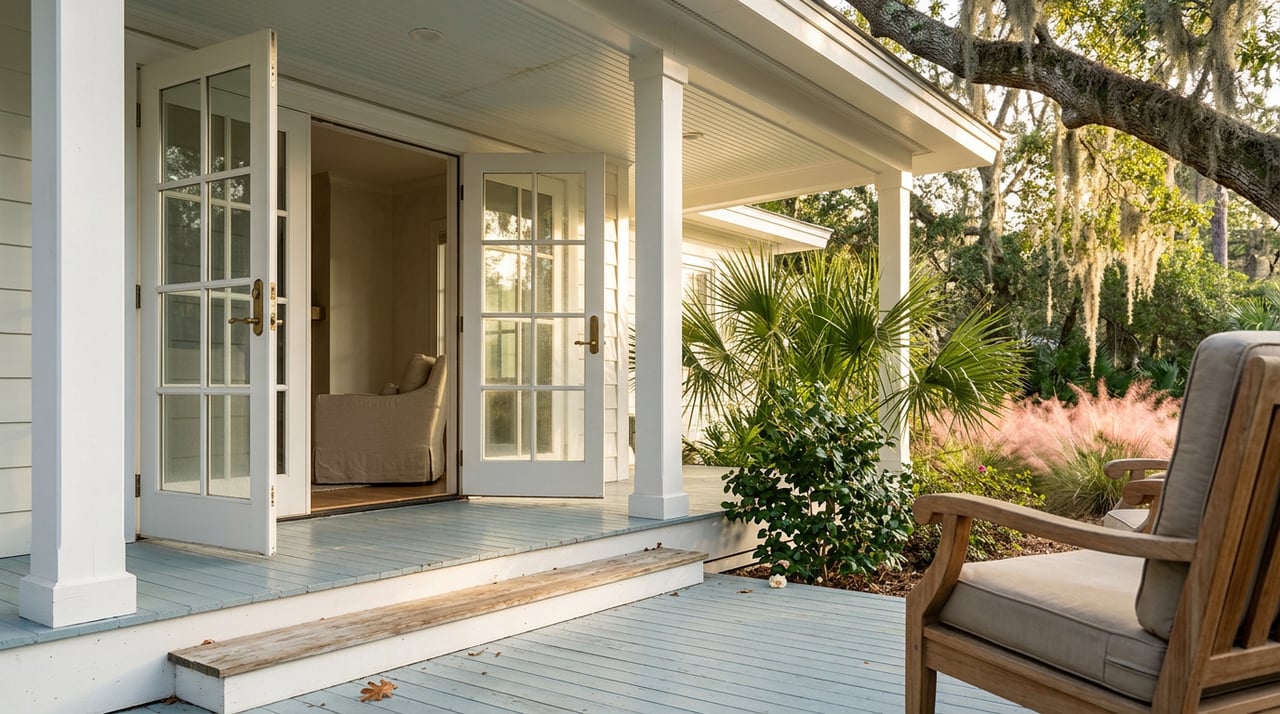
Jekyll Island Rental License Transfer: What Buyers Need
August 13, 2026
August 13, 2026
Ask a buyer touring a rental-ready cottage on Jekyll Island what they're paying for, and most will name three things: the house, the location, and the income it's already producing. What almost nobody asks until it's too late is whether that income transfers with the deed. On Jekyll Island, it doesn't. The rental license that lets a property take overnight guests is issued to a specific owner for a specific property, and the Jekyll Island Authority's own rules state that a sale or other conveyance does not carry that license to the new owner automatically. The buyer inherits the lease, the structure, and the reputation of the listing. The right to rent it starts over.
This matters more here than in most coastal markets because Jekyll Island isn't a fee-simple town with a county rental ordinance in the background. The State of Georgia owns the land, and the Jekyll Island Authority is both landlord and regulator, which means the same body that collects your ground rent also decides whether you can legally book a guest. That double role is where the friction lives, and it's worth walking through before anyone writes a number on a closing statement based on a seller's trailing twelve months.
The leasehold interest transfers. Current residential leases on Jekyll Island run out anywhere from 2049 to 2088, and a sale assigns the remaining years of that term to the buyer along with title to the structure and improvements. What doesn't transfer is the operating permission to rent the structure overnight. Rental licenses are issued per property, expire on December 31 regardless of when they were granted, and a new owner has to file a fresh application, not a renewal.
Here's the part that catches people who are underwriting the deal as an income property:
| Transfers automatically at closing | Resets to zero at closing |
|---|---|
| Leasehold interest and remaining lease term | JIA rental license |
| Title to the structure and improvements | Pre-closing rental booking calendar |
| HOA membership, where applicable | Percentage rent reporting history |
A buyer running the math on a seller's trailing revenue is pricing an asset that legally cannot produce that same revenue on day one. The gap between closing and license approval is not a paperwork formality. It's a real stretch of calendar days, possibly weeks, where the unit sits empty even if every booking platform shows it as available.
Jekyll Island properties must pass inspection before a license is issued, which means the new owner's timeline runs through the Authority's schedule, not the buyer's. Add to that the fact that licenses run on a calendar year, expiring every December 31 no matter the issue date, and the timing gets less forgiving the closer a purchase happens to year-end. A buyer who closes in October and finally gets licensed in November is renewing again within weeks, not settling into a full operating year.
Picture the buyer who penciled out the numbers before the offer:
If the seller's rental history shows roughly $8,000 a month in peak season, and I close in June, I should be close to that by July.
That math assumes the license transfers with the sale. It doesn't. The buyer is instead applying as a new licensee, scheduling an inspection, and waiting for approval before a single guest can legally check in. Every week of that process is a week the seller's trailing revenue was never available to the buyer in the first place.
Two different obligations get confused constantly, and they shouldn't be, because they're calculated on completely different bases. The annual lease rent, what leasehold owners pay the Authority just to hold the ground under their house, is set at 0.4 percent of the land's fair market value as determined by the Glynn County Tax Assessor. That number has nothing to do with whether the house is rented at all.
The percentage rent is a separate obligation that only applies to licensed rental operators. The Authority's own homeowner guidance states it is remitted in the same manner as the Georgia hotel-motel tax, and current market reporting on Jekyll Island's short-term rental sector puts the rate at 3 percent of gross rental revenue, paid monthly. A buyer comparing a Jekyll Island rental to one on St. Simons Island needs to budget for both the ground lease and this percentage rent, on top of the standard state and local lodging taxes that apply to any short-term rental in Georgia. A seller's pro forma that only shows one of these two obligations is showing half the picture.
The leasehold structure creates a second layer of friction that has nothing to do with rentals and everything to do with financing. Fannie Mae's Selling Guide requires that a ground lease run at least five years beyond the maturity of the loan it secures, which is the baseline most conventional lenders will check before underwriting a Jekyll Island purchase. Some lenders go further and want a cushion closer to thirty years remaining beyond the loan term, which can quietly eliminate certain older leaseholds from financing at all, even when the house itself is in excellent condition.
That constraint shows up in resale pricing too. Leasehold properties on Jekyll Island tend to sell at a discount compared with similar fee-simple homes elsewhere in the Golden Isles, and the pool of both lenders and buyers narrows further as the remaining lease term shortens. None of that is a reason to avoid the market. It is a reason to have the lease expiration date and the lender conversation happen in the first week of a search, not the week before closing.
As of March 2026, Realtor.com reported 65 homes for sale on Jekyll Island, with a median listing price of $449,500 and a median 105 days on market, classifying the island as a balanced market. That pace gives buyers room to work through leasehold and licensing questions before writing an offer, rather than racing a bidding war.
On the rental side, market data from Airbnb analytics firm Staystra put Jekyll Island's April 2026 occupancy at 62.4 percent, above the historical April average of 58.8 percent, with an average nightly rate around $360 and a full-year 2025 occupancy average of 54.5 percent. Locally, property managers Hodnett Cooper Vacation Rentals and Vacasa run the largest listing counts on the island, which tells you the professional management infrastructure exists here even for owners who don't want to handle licensing and guest turnover themselves.
A buyer who wants rental income from day one, or as close to it as the rules allow, has a short list of things worth doing before the offer, not after:
None of this makes Jekyll Island a harder place to own rental property than it looks on paper. It makes it a market with its own rhythm, one where the license, the lease, and the loan all have separate clocks running, and where the seller's last twelve months of income tells you what the property can do, not what it will do for you in month one.
Does the seller's rental booking history or guest reviews transfer with the property? The license itself does not, since it is issued fresh to you as the new owner. Any reservations sitting on the seller's calendar at closing were taken under a license that no longer applies to the property, so confirm directly with the seller and the Authority how those bookings will be handled before you close.
Are there occupancy limits once the license is active? Yes. Jekyll Island's rental regulations cap occupancy at two adults per bedroom plus two additional occupants, and children under 16 are not counted toward that limit.
Does the license fee change from year to year? It has moved before. The annual fee was raised from $30 to $75 in 2023, so a first-year owner should confirm the current fee rather than assume last year's number still applies.
If you're weighing a rental purchase on Jekyll Island, or trying to figure out what a seller's income history actually promises you, Page Aiken has spent decades working the Golden Isles market and can walk through the lease, the license, and the lender conversation before you're locked into a contract. Start the Conversation.
Stay up to date on the latest real estate trends.




Local
Not All Marshfront Is Created Equal


A data-driven approach paired with international experience ensures every client benefits from a deeper understanding of market movement and opportunity.