The Historic Tax Credit Story In Old Town Brunswick Just Split In Two
August 13, 2026
August 13, 2026
WPGANews reported that Governor Brian Kemp explained his May 12, 2026 veto of House Bill 376, the bill that would have doubled Georgia's statewide cap on historic rehabilitation tax credits from $30 million to $60 million a year, with the words, "The General Assembly failed to account for this loss of revenue in the appropriations process." If you have walked Newcastle or Gloucester Street this year and heard someone mention "the historic tax credit" as the reason an old building pencils out, the story is no longer that simple. It split into two programs moving in opposite directions, and which one applies to you depends entirely on what you are buying and how you plan to use it.
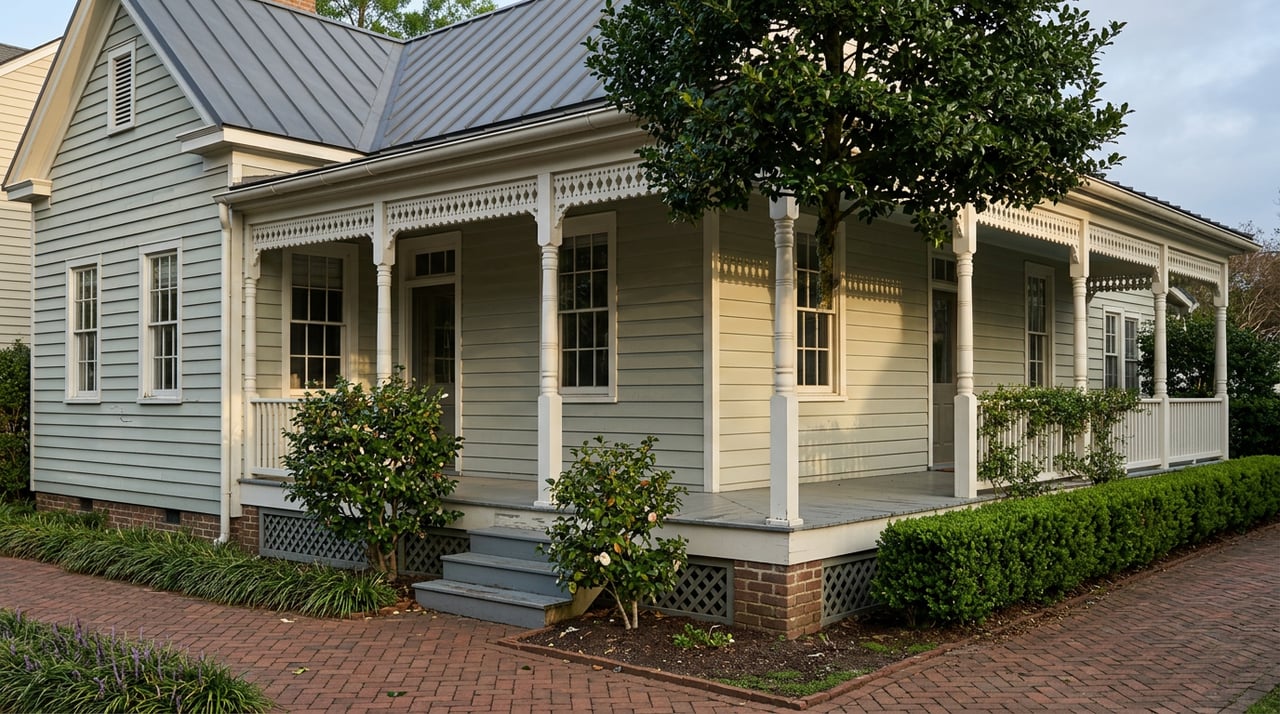
Georgia's Historic Rehabilitation Tax Credit has been in place since 2002 and has driven more than $1 billion in private investment since 2020 alone, funding the kind of adaptive-reuse projects that turned Old Town's vacant storefronts back into occupied buildings. Liberty Lofts on Newcastle Street is a local example. The building started life in 1925 as a Ford showroom and garage before a historic tax credit renovation converted it into lofts, and it sits on the National Register inside Old Town's historic district.
Novoco reports that House Bill 376 would have raised the annual cap on that credit for income-producing properties from $30 million to $60 million statewide, while also trimming the credit percentage for nonresidential projects from 25% down to 20%; BillTrack50 reports that the bill would have raised the minimum rehabilitation spend required to qualify from $5,000 to $25,000. The bill passed the House 161-9 and the Senate 46-2, bipartisan margins large enough that preservation advocates assumed it was headed for the governor's desk as a formality. Kemp vetoed it anyway, citing a revenue concern in the appropriations process. The existing $30 million annual cap for commercial and income-producing rehabs stays in place through the program's 2029 sunset, but it is not growing, and it is competing against every other qualifying rehab project in the state.
That matters most for anyone eyeing the $16 million Brunswick Square project, diagonal from Brunswick City Hall, as detailed in an Urbanize Atlanta report. Caliber Capital, led by Danny York, and the Atlanta firm Terminus Design Group are converting an idle corner into an adaptive-reuse hotel and retail space with a new apartment building behind it, on a site cleared by the Brunswick Historic Preservation Board. York said in the report, "the Port has grown significantly over the past few years, we got a Buc-ee's," pointing to the kind of momentum that makes commercial redevelopment here look attractive on paper. The math behind that kind of deal now runs through a state credit pool that just got frozen rather than doubled.
While the commercial credit stalled, a separate residential program started right on schedule. Georgia's Historic Home Tax Credit Program opened applications on October 1, 2025, with rehabilitation work eligible to begin January 1, 2026. It is built for owner-occupied primary residences that are either individually listed, contributing to a local historic district, or locally designated as historic, and it offers up to $100,000 in credits against a $5 million annual statewide pool.
This is a different bucket of money entirely from the one HB 376 targeted; reading last month's veto headlines as "the historic tax credit is dead" gets half the story wrong.
| Historic Home Credit | Commercial / Income-Producing Credit | |
|---|---|---|
| Who qualifies | Owner-occupants of a locally designated or contributing historic property | Owners of income-producing certified historic structures |
| Statewide annual cap | $5 million | $30 million (would have risen to $60 million under HB 376) |
| Per-project cap | Up to $100,000 in credits | $5 million to $10 million, depending on project scope |
| 2026 status | Live since January 1, 2026 | Cap frozen after the May 2026 veto; program continues through its 2029 sunset |
Georgia DCA says the federal 20% rehabilitation tax credit for income-producing historic properties is unaffected by any of this and remains available to commercial buyers regardless of what happens with the state cap, which is worth knowing if a deal's math depends on layering credits.
Old Town buyers also need to account for something that has nothing to do with historic designation at all. Brunswick voters approved a new homestead exemption with 86% support on November 4, 2025, the first property tax cut in the city's history, effective for the 2026 tax year and forward. The relief is graduated by how long you have owned the home: 5% off assessed value for ownership of five years or less, climbing to 50% for owners of 30 years or more.
That structure rewards patience, not purchase timing. A buyer closing on a historic cottage this year gets the smallest tier of relief and grows into a larger one only by staying put. If your plan for an Old Town property is a fast renovate-and-sell, the homestead exemption barely factors into your return. If your plan is to live in it for a decade or two, it becomes a real part of the long-term cost picture, stacked on top of whichever state credit applies to your project.
Old Town's numbers already price in some of this optimism. Over the three months ending May 2026, homes in the Old Town neighborhood sold at a median of $367,000, up 6.3% from the same period a year earlier, with homes going under contract in around 38 days and typically selling a few percent below list price. That is a meaningfully different number from citywide Brunswick data, where average home value estimates as of April 2026 sat closer to $254,000.
Be careful with citywide figures in a market this small. One dataset showed Brunswick's median sale price swinging more than 170% year over year in February 2026 alone, a distortion that comes from comparing a handful of sales rather than a genuine trend. In a market where only a few homes change hands each month, a citywide median can move wildly based on which two or three properties happened to close. The neighborhood-level number for Old Town, drawn from a deeper pool of historic-district sales, is the one that actually reflects what a fixer cottage or a renovated Victorian is trading for here. If someone hands you a citywide average to justify a price on Newcastle Street, ask which properties are actually in it.
None of this happens in a vacuum. Brunswick's Downtown Development Authority reported hosting 999 events with roughly 240,000 attendees in fiscal year 2026, alongside newer initiatives like Brunswick Spice, a March restaurant promotion that generated an estimated $47,000 in local economic activity, and Downtown Dollars, a program that keeps spending inside downtown merchants for up to five years after purchase. The tax credit conversation is one input into Old Town's recovery, not the whole story of it.
Old Town Brunswick is not short on incentive programs right now. It is short on buyers who understand that those programs no longer point in the same direction. Getting the right answer for your specific property, whether it is a live-in cottage or a small income-producing building, is exactly the kind of research worth doing before you make an offer rather than after.
If you are weighing a purchase in Old Town Brunswick and want a straight read on how a specific property lines up against these programs, Page Aiken is a good place to start the conversation.
This article is general information, not legal, tax or financial advice. Consult a qualified professional about your situation.
Stay up to date on the latest real estate trends.



Local
Not All Marshfront Is Created Equal

A data-driven approach paired with international experience ensures every client benefits from a deeper understanding of market movement and opportunity.